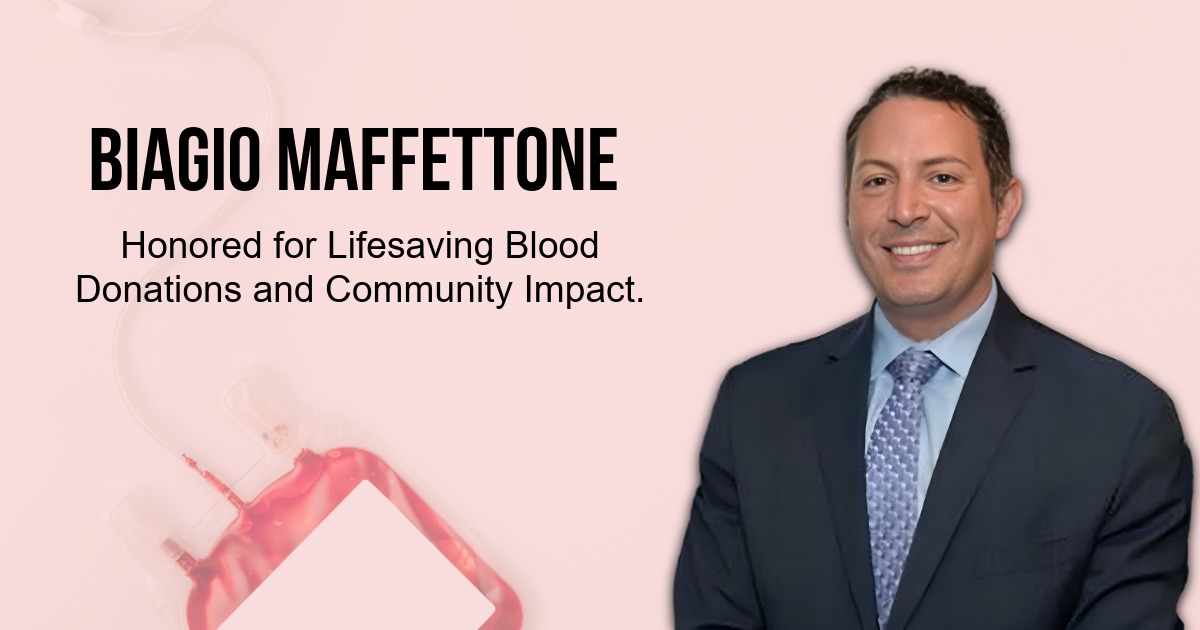
Biagio Maffettone blood donation efforts were never about recognition, it was about showing up when it mattered. What began as a simple decision to help others turned into a long-term commitment to public health. Over the years, Biagio has completed eight lifetime blood donations, reaching the significant milestone of one gallon donated through the American Red Cross, a contribution that has quietly helped save lives he may never know.
For Biagio, the decision to donate blood was driven by a simple but powerful realization: that a small personal effort could have an immediate impact on someone else’s life. Learning how often hospitals face blood shortages and how a single donation can help multiple patients motivate him to take action. What began as a one-time decision quickly became a habit, shaped by the belief that showing up consistently matters more than making a grand gesture.
Recently, the American Red Cross recognized this achievement by presenting Biagio with a digital milestone badge, honoring his dedication to lifesaving action. While modest about the recognition, Biagio’s journey highlights how consistent individual choices can create meaningful impact within the healthcare system.
Why Blood Donation Is a Public Health Priority
According to national blood organizations, someone in the United States needs blood approximately every two seconds, underscoring the constant demand for volunteer donors.
Key reasons blood donation is critical to public health include:
Emergency and Trauma Care
Accidents, natural disasters, and sudden medical emergencies often require immediate access to blood. In many trauma situations, timely transfusions are the difference between survival and loss of life.
Support for Chronic and Critical Illness
Patients undergoing cancer treatments, organ transplants, or managing blood disorders frequently depend on regular transfusions as part of their care plans.
Surgical Procedures
From routine operations to complex surgeries, donated blood plays a crucial role in ensuring patient safety, managing blood loss, and supporting recovery.
Maternal and Newborn Health
Blood transfusions are sometimes required during childbirth complications, helping protect both mothers and infants during critical moments.
Healthcare organizations consistently emphasize that a stable blood supply saves millions of lives each year, making regular donors indispensable partners in public health.
Health Considerations for Blood Donors
While the primary purpose of blood donation is to help others, donating responsibly may also offer indirect benefits for donors when done according to medical guidelines.
Potential considerations include:
- Iron Regulation: For some individuals, donating blood may help manage excess iron levels under appropriate medical supervision.
- Routine Health Screening: Each donation includes basic health checks, such as hemoglobin levels and blood pressure monitoring.
- Well-Being and Purpose: Many donors report a sense of fulfillment and emotional well-being from contributing to lifesaving efforts.
Medical professionals stress that all donors should meet eligibility criteria and follow approved donation intervals to ensure safety. Blood donation should always take place under medically supervised conditions.
Biagio Maffettone’s Commitment to Lifesaving Action
Biagio Maffettone’s dedication to blood donation reflects a long-term commitment rooted in consistency rather than one-time gestures. Over the years, his cumulative donations have helped support patients he may never meet, underscoring the essential role regular donors play in sustaining healthcare systems.
Biagio’s dedication shows that small, consistent actions really can save lives and support healthcare systems. By showing up regularly, he helps make blood donation a normal, everyday practice not just something people do in emergencies.
By setting a visible example, Biagio helps normalize blood donation as a routine and responsible health practice rather than an occasional or crisis-driven response.
The Blood Donation Process: What to Expect
For individuals considering becoming blood donors, understanding the process can help reduce uncertainty and encourage participation.
Step 1: Eligibility Check
Most healthy adults between the ages of 17 and 65 are eligible to donate, though requirements may vary based on medical history, travel, medications, and lifestyle factors.
Step 2: Preparation
Donors are typically advised to:
- Stay well-hydrated
- Eat a balanced meal before donating
- Avoid strenuous activity beforehand
Step 3: The Donation
The blood collection itself usually takes 8–10 minutes, with the entire visit lasting about an hour, including health screening and recovery time.
Step 4: Recovery
After donating, individuals are encouraged to rest briefly, drink fluids, and resume normal activities shortly thereafter.
Donation centers follow strict medical protocols to ensure donor comfort and safety throughout the process.
Community Health Impact and Awareness
One of the most significant contributions made by consistent donors is the awareness they help generate. When individuals share their donation experiences, they help reduce fear, address misconceptions, and encourage others to participate.
Increased awareness contributes to:
- Higher donor participation rates
- More stable blood supplies
- Improved emergency preparedness
- Greater public trust in healthcare systems
Blood donation is most effective when it becomes a shared community practice supported by education, advocacy, and visible leadership.
Encouraging a Culture of Giving
Healthcare experts emphasize that sustaining a reliable blood supply requires more than awareness; it requires role models. Regular donors demonstrate that blood donation is safe, impactful, and accessible.
Individuals can support this culture by:
- Becoming consistent donors
- Encouraging friends and family to participate
- Supporting local blood drives
- Sharing accurate information about donation safety and benefits
Collective action helps ensure that lifesaving blood is available when it is needed most.
Supporting Health Through Action
Blood donation is one of the most direct and effective ways individuals can support public health. Through regular participation, donors help save lives, strengthen healthcare systems, and foster a culture of responsibility and compassion.
Biagio Maffettone’s commitment to blood donation demonstrates how consistent individual actions can create lasting community impact. His example serves as a reminder that improving public health does not always require grand gestures, sometimes it begins with a simple decision to give.
If you are eligible to donate, consider taking the same step Biagio did and scheduling a blood donation through a trusted organization such as the American Red Cross. One donation can help save multiple lives, and becoming a regular donor helps ensure blood is available when patients need it most. Taking action today can make a real difference for someone tomorrow.
Disclaimer
This article is intended for informational and educational purposes only and should not be considered medical advice. Blood donation eligibility, benefits, and risks may vary based on individual health conditions. Readers are encouraged to consult qualified healthcare professionals or official blood donation organizations, such as the American Red Cross, for personalized guidance and the most current medical recommendations. Participation in blood donation should always follow approved medical guidelines and safety protocols.